Hospitality and Catering
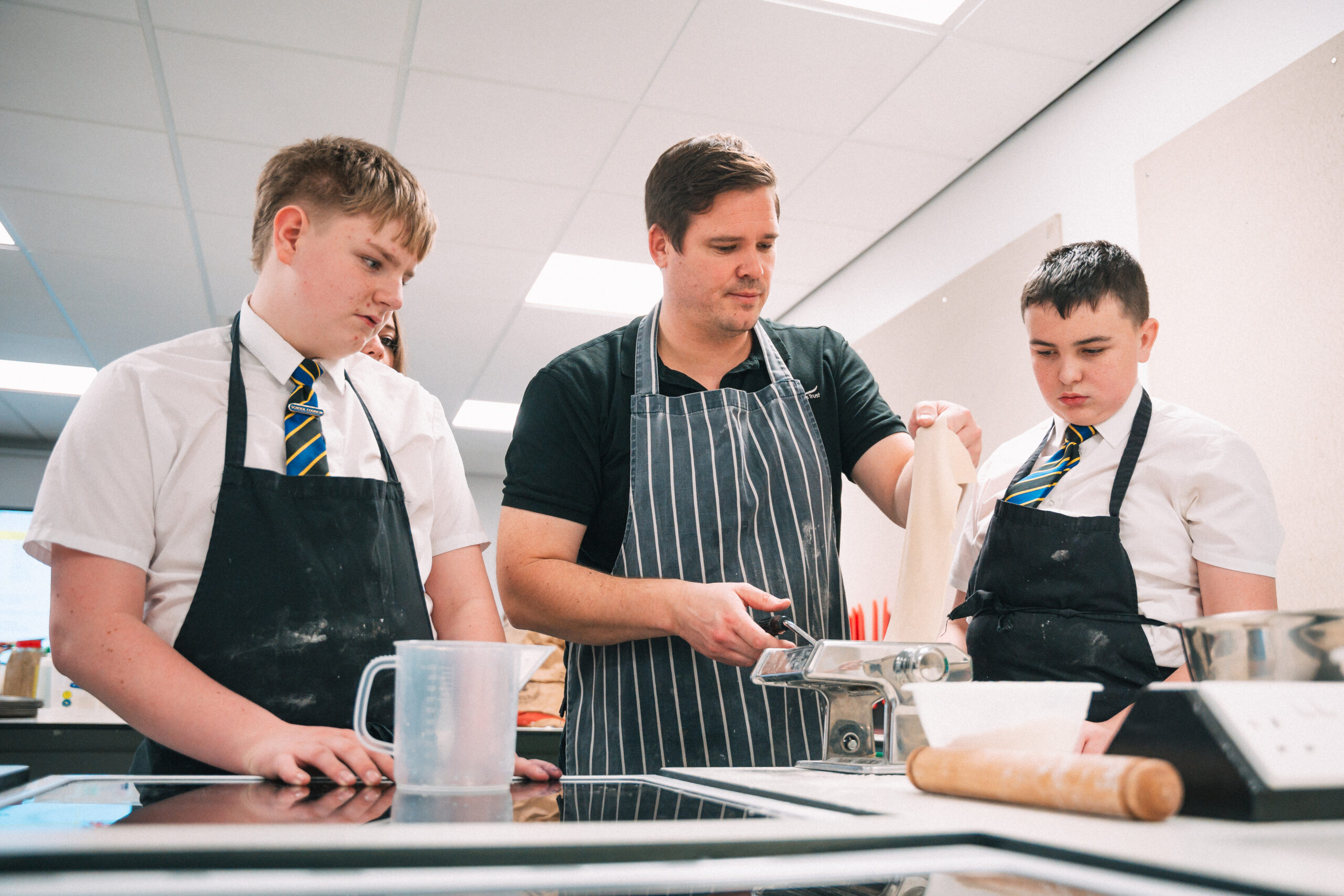
KS3 Catering – Course Overview
KS3 Catering introduces students to the concept of healthy eating through both theory and practical lessons. The scheme of work implements the requirements for food within the National Curriculum for Design and Technology along with the core competences for young people as set out by nutrition.org.uk
KS3 Catering – Curriculum Intent
The KS3 Catering curriculum is designed to give learners a foundation in crucial practical skills required to be successful in KS4 Hospitality and Catering, further education and in their adult lives.
The curriculum allows a build-up of skills, knowledge and confidence with each year of study. Students work towards independent creative presentation, complex cooking techniques and developing their own dish ideas.
We build upon foundation skills, scaffolding year by year to develop a level of mastery, equipping students with the skills and processes required to enter further study at KS4.
The power of inclusion is front and centre of our philosophy. We want to enable students to be included in the wider conversations around our subject, equipping them with a knowledgeable confidence regardless of background.
KS4 Hospitality and Catering – Course Overview
The WJEC Level 1/2 Hospitality and Catering course provides students with a broad and engaging introduction to the hospitality and catering industry, one of the UK’s largest and most diverse employment sectors. The qualification combines both theoretical knowledge and practical skills, preparing learners for further study, apprenticeships, or employment within the industry.
The course is structured into two main units:
Unit 1: The Hospitality and Catering Industry (Exam)
This unit is externally assessed through a written examination. Students will develop knowledge and understanding of:
- The structure of the hospitality and catering industry
- Different types of establishments and job roles
- Health and safety, food hygiene, and food safety legislation
- Factors affecting menu planning, including nutrition, dietary needs, cost, and environmental considerations
- The importance of customer service and meeting client needs
Unit 2: Hospitality and Catering in Action (Non exam assessment)
This unit is internally assessed and focuses on practical application. Students will:
- Plan, prepare, cook, and present a range of dishes
- Demonstrate safe and hygienic working practices
- Apply knowledge of nutrition when designing dishes
- Adapt recipes to meet specific dietary requirements
- Evaluate their work, including time management, organisation, and final outcomes
Throughout the course, students will build a wide range of practical cooking skills alongside essential transferable skills such as teamwork, problem-solving, organisation, and communication
| Pedagogy | Enrichment | Further |
| Applied learning through real-world vocational contexts Learning through practical tasks (planning, cooking, presenting dishes) Use of scenario-based learning and stimulus materials Independent learning and research (menu planning, nutrition) Skill progression from basic → medium → complex techniques Assessment for learning via practical reviews and evaluation Integration of cross-curricular knowledge Teaching health, safety, and food hygiene through practice Development of analytical and evaluative skills Collaborative work (kitchen roles, team tasks) | Visits to hospitality settings (restaurants, hotels, catering businesses) Guest speakers (chefs, hospitality professionals) Participation in cooking competitions or events Work experience or part-time roles in the sector Research into food trends, sustainability, global cuisines Extension tasks (advanced techniques, complex dishes) Exploring higher-level culinary skills or specialist diets Peer assessment and tasting panels Themed menu projects (cultural, seasonal, sustainable) Food safety certifications or workshops Reviewing professional menus or restaurant critiques Group catering events or pop-up cafés | Focus on vocational relevance and career pathways Strong emphasis on industry links and employability Balance of theory (Unit 1) and practice (Unit 2) Encourages application of knowledge in context Promotes independent and reflective learners Inclusive design with equality and accessibility Clear progression of skills and challenge Emphasis on reflection and improvement Synoptic learning linking all units together Strong focus on safety and professional standards Encourages critical thinking and judgement Reflects real industry teamwork structures |

